
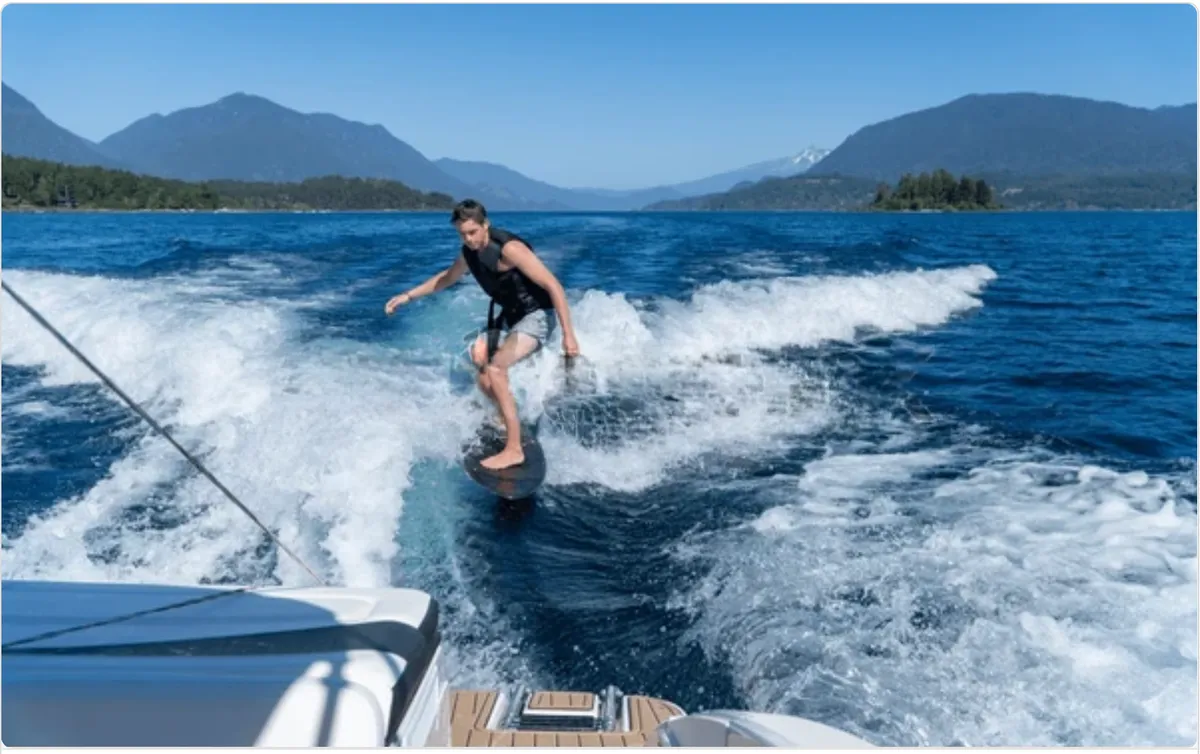
The citizen-led push to curtail the use on Vermont lakes of wake-generating boats — aka wakeboats and accompanying wakesports — continued this summer.
To recap on wakeboats and reasons for limiting them, wakeboats are powerful motor boats that carry thousands of pounds of water in ballast tanks. The point of this design is to make them plow deeply into the water, throwing up a wake powerful and large enough for an adult to surf without a tow rope. Wakeboats are widely criticized for endangering non-motorized recreation (e.g. canoes, kayaks, paddle boarders, swimmers, lakeside docks, and wading small children) by capsizing or swamping them. The powerful wakes can cause shore erosion, damage fish habitat, and disrupt nesting loons and other wildlife. Filling and emptying of ballast tanks can transfer aquatic invasive species from infested lakes to pristine lakes.
The VT Agency of Natural Resources (ANR) regulates all uses of public waters, including lakes, through the Use of Public Waters Rule. In 2022 private individuals, the VT Center for Ecostudies, lake organizations, and the group Responsible Wakes for Vermont Lakes petitioned ANR to modify the Use of Public Waters Rule to manage the use of wake boats in order to limit their damaging effects.
In response, ANR came up with a Rule change that requires wake boats to operate at a 500-ft distance from a lake’s shore in a minimum zone of 50 contiguous acres that is at least 200 ft wide. It also required decontamination of ballast tanks and a “home lake” rule that limited a wake boat to one lake per summer, unless it underwent decontamination before transport to another lake. However many argued that these proposals were insufficient, particularly the 500 ft separation of wakesport zones from shore. According to a scientific study of boat wakes, 984ft (300 meters) would be needed to be truly protective.
In spite of over 600 objections from the public (compared to a little over 130 in favor of wakesports), this Rule was adopted by LCAR (Legislative Committee on Administrative Rules) and became official in time for the 2024 boating season. It meant that wake boats would continue to use Lake Fairlee, a waterbody shared among Thetford, West Fairlee, and Fairlee. Though small, Lake Fairlee is large enough that a wakesports zone 500 feet offshore and 200 feet wide could be delineated. At least two wakeboats that are owned by residents on Lake Fairlee, plus one "outsider" wakeboat, have been operating there in 2024 and 2025.
For Lake Fairlee, the only way to ban wakeboats in the face of this rule was to petition for a single-lake rule. And several other lake associations did likewise.
ANR denied these petitions without detailed reasons, but it was not completely deaf to the public's comments — on both sides. Earlier this year it proposed changes to the Use of Public Water Rule and invited public feedback on them. Their process consisted of an overview of formal rulemaking on July 1st, followed by two public comment sessions, in-person or virtual, on July 30th and 31st, including a run-down of proposed rule changes. Written comments were accepted up until August 19th.
The proposed new rules are as follows:
Loons
• A 500-foot offset between wakesports and loon nesting sites is required during loon nesting season.
Wakesports
• The Home Lake provision for wakeboats is removed.
• The existing 500-foot safety offset (between wakesports zones and lake shores and other lake users) remains the same. The 200 ft offset from other users increases to 500 ft. The actual wakesports zone must have a minimum of 100 contiguous acres that are at least 500 feet from shore on all sides and at least 20 feet deep. The zone must be 3,000 feet long, and at least 200 feet wide.
• The requirement to provide proof of wakeboat ballast tank decontamination is removed and replaced with a reference to the required universal decontamination standards in VT Statute (10 V.S.A. §1454 Transport Of Aquatic Plants And Aquatic Nuisance Species).
• The shapes of wakesports zones is "normalized" to remove odd-shaped sections.
• The Secretary of ANR is given flexibility to add and remove wakesports-eligible lakes from the Secretary's list based on changing conditions (i.e. water levels) or due to lake management activities or scientific research that could be impacted by wakesports.
• The authority and types of decisions that the Secretary may make under an emergency declaration is clarified. (For example, under a declaration of emergency, like flooding, the Secretary may temporarily prohibit boat travel over 5mph on specific waterbodies, except for emergency vessels, without going through a formal and lengthy public process.)
• A list of wakesports-eligible lakes shall be maintained by the Secretary and made available to the public in place of a list in the Rule appendices.
Under this proposed new Rule, Lake Fairlee will no longer be required to allow wakesports. Nor will the following lakes that also submitted petitions to prohibit wakesports: Waterbury Reservoir, Shadow Lake, Lake Parker, and Joe’s Pond. Additionally, the following lakes that did not submit petitions would no longer have wakesports zones: Lake Iroquois, Lake Hortonia, Peacham Pond, Miles Pond, Holland Pond, and Sunset Lake. Molly’s Falls Reservoir is no longer eligible to support wakesports due to a permanent reduction in water level (and size).
For the 18 lakes that must still allow wakesports, the removal of the home lake rule is a major setback and appears to be a concession to the wakesports industry. This, and the removal of a wakeboat-specific requirement to decontaminate, leaves a significant loophole for the transport of invasive aquatic species between lakes.
Vermont law states "It shall be a violation of this section for a person transporting a vessel to or from a water to not have the vessel, the motor vehicle transporting the vessel, the trailer, and other equipment inspected and decontaminated at an approved aquatic nuisance species inspection station prior to launching the vessel and upon leaving a water if:
(1) an aquatic nuisance species inspection station is maintained at the area where the vessel is entering or leaving the water;
(2) the aquatic nuisance species inspection station is open; and
(3) an individual operating the aquatic nuisance species inspection station identifies the vessel for inspection or decontamination.
The law assumes that all boat launches of the 18 lakes open to wakesports have aquatic nuisance species inspection stations and the law places the onus of maintaining and staffing a decontamination station and inspecting boats on lake associations or towns. There seems to be no other credible enforcement mechanism:
2;e Presumption of compliance; aquatic nuisance species inspection station. A person transporting a vessel to or from a water will be presumed to have not violated subsections (a), (b), and (d) of this section if, upon launching a vessel and upon leaving a water, the vessel is decontaminated at an approved aquatic nuisance inspection station*. If staff of an approved aquatic nuisance inspection station observe a violation of subsection (a), (b), or (d) of this section, staff shall notify the person transporting the vessel.
*assuming it is open
One of the 18 lakes remaining open to wakesports under the proposed rule is Maidstone Lake, rated as one of the cleanest lakes in Vermont.
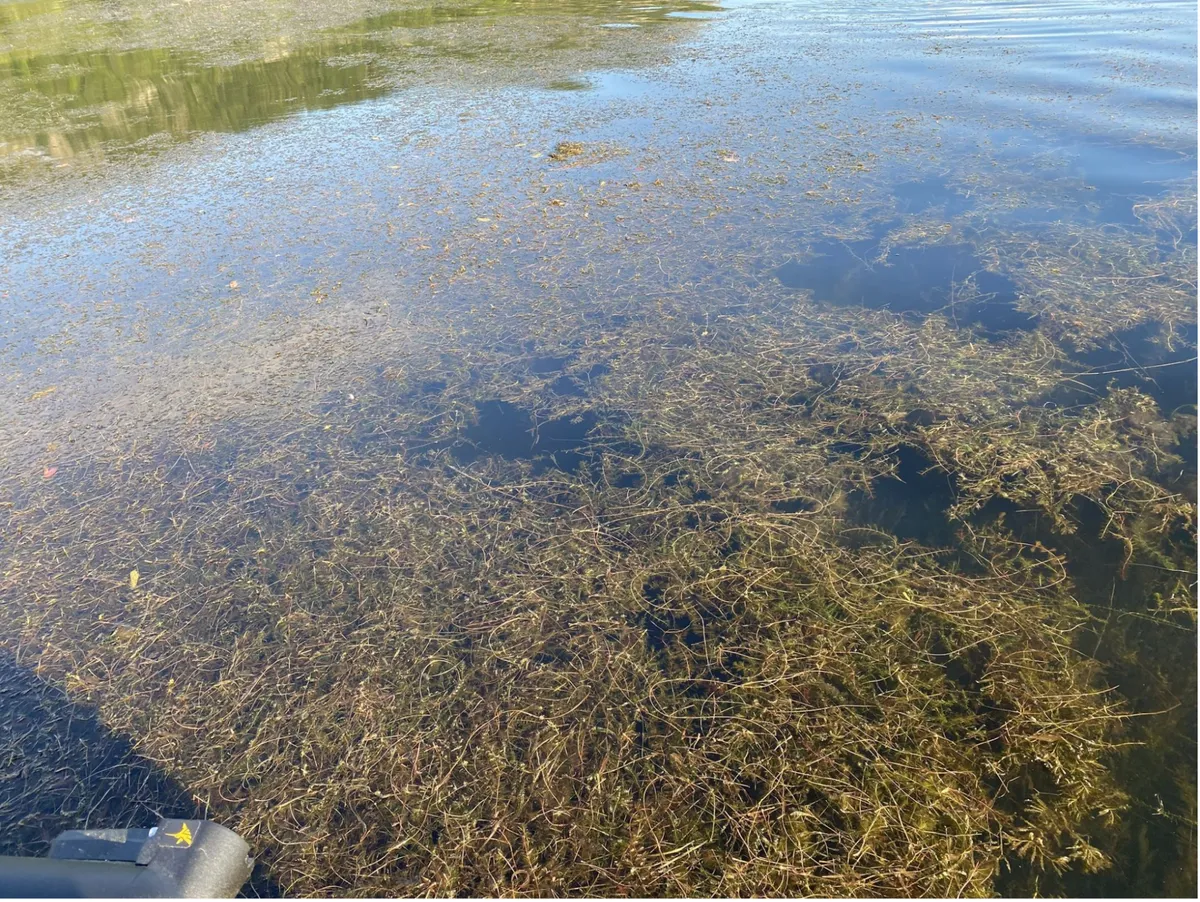
At least 99 of Vermont’s 800-plus lakes are infested with milfoil, and many lake associations are spending enormous sums annually battling this invasive plant Milfoil chokes lakewaters, inflicts great damage to the lake ecosystem, and makes the water unsuitable for many types of recreation. Boat propellers break the plant into fragments that are viable and easily transported to other lakes. In the early 2000s, Lake Fairlee alone spent over $100,000 per year on milfoil treatment. The VT Department of Fish and Wildlife states: “Despite a variety of treatment methods, Eurasian watermilfoil is nearly impossible to eradicate once it has invaded.”
The Federation of VT Lakes and Ponds responded to the new proposed rule with a long critique in which they pointed out:
"Wake sports do not meet the definition of normal use as defined in statute:
Rule 5.6: “Normal use” means any lawful use of any specific body of public water that occurred on a regular, frequent, and consistent basis prior to January 1, 1993.
"We question a process that allows this and other activities that do not meet this definition to take place on the state’s public waters. The current practice (of ANR) is to allow “anything goes” until lake stewards and concerned citizens raise the issue. These volunteer groups are then required to engage in a multi-year and complex petitioning process to address the issue of non-normal use, all the while the state allows this (non-normal) use to take place on the public waters, possibly causing considerable damage to fragile aquatic ecosystems and hazards to other users."
If approved by LCAR the new rule will come into effect in time for the 2026 boating season.
Comments 2
Sign in to join the conversation. It’s free, no password needed.
Sign inInteresting and deeply disappointing outcome. I wonder how LCAR manages to ignore organized and persistent citizen input in favor of boating industry interests. So I asked Duck.ai (Do you trust AI to deliver fact-based information? Drive taxis and semi trailer trucks?)
Why does the wake boat industry enjoy political clout regarding its regulation?
The wake boat industry enjoys significant political clout regarding its regulation for several reasons, primarily tied to economic interests, advocacy efforts, and the cultural significance of boating.
## Economic Impact (OH! Major Pinocchio!)
The wake boat industry contributes substantially to local economies. It supports thousands of jobs in manufacturing, sales, and tourism, generating billions in revenue. This economic footprint makes it a powerful player in political discussions, as local governments often prioritize economic growth and job creation over environmental concerns.
## Advocacy and Lobbying
Organizations like the National Marine Manufacturers Association (NMMA) and the Water Sports Industry Association (WSIA) actively lobby against restrictive regulations. They argue that such regulations could set a precedent for further restrictions on all types of watercraft, which could negatively impact the broader boating industry. Their efforts include promoting education on responsible boating practices and engaging in legislative processes to protect boating access.
## Cultural Significance (OOPS! Another Pinocchio!)
Boating, particularly wake surfing, has become a popular recreational activity, fostering a strong community of enthusiasts. This cultural aspect creates a passionate base of supporters who advocate for the sport, often framing regulatory efforts as attacks on personal freedoms and recreational enjoyment. The emotional connection many have to boating can influence public opinion and sway political decisions.
## Local Governance and Resistance
In many regions, local governments face pressure from both sides of the debate—those advocating for environmental protections and those supporting the wake boat industry. The industry often mobilizes its supporters to resist local bans or restrictions, arguing that they are unnecessary and harmful to the recreational economy. This grassroots mobilization can lead to significant political influence at local and state levels.
## Summary of Key Points
**Economic Impact** | Significant job creation and revenue generation for local economies.
**Advocacy and Lobbying** | Strong lobbying efforts to prevent restrictive regulations.
**Cultural Significance** | Deep emotional ties to boating and wake surfing among enthusiasts. |
**Local Governance** | Mobilization of supporters to resist local bans and regulations. |
The combination of these factors creates a robust framework for the wake boat industry's political influence, allowing it to navigate regulatory challenges effectively while promoting its interests.
With reference to this sentence in John Miller's comments below:
"The wake boat industry claims it contributes significantly to local economies."
Vermont’s rule-making process requires an economic impact analysis to accompany a proposed rule change. On February 2, 2023 RWVL sent an economic impact analysis <http://responsiblewakes.org/wp-content/uploads/2023/02/Economic-Impact-Analysis.pdf> to the DEC. It was reviewed by several independent economists. The analysis demonstrates that although rule changes limiting wake boats would have a small negative impact on wake boat sales, the benefits to VT government, businesses and citizens would have a far greater positive value.
Their analysis examines two scenarios, with and without wake boat regulation, ten years into the future. It shows that the economic benefits of regulation outweigh the costs by about ten to one. The annual benefits — estimated at $93 million — include the preservation of water quality, and the continuation of affordable, small-scale recreational activities - the thousands of swimmers, kayakers, sailors, anglers, water-skiers, and other small-craft users who are the foundation of Vermont’s substantial lake-based economy. These users stay in hotels, B&B’s, campsites etc, eat in restaurants, and spend money on goods and other services. The proposed rule changes would protect the clean, clear, and safe lakes that are the foundation of this thriving tourist economy. Just a small number of wake surfers close to shore can displace other users and cause costly environmental damage, while contributing far less to the state’s economy. The limitations on the growth of the wake boat industry would be worth about $8 million annually.