
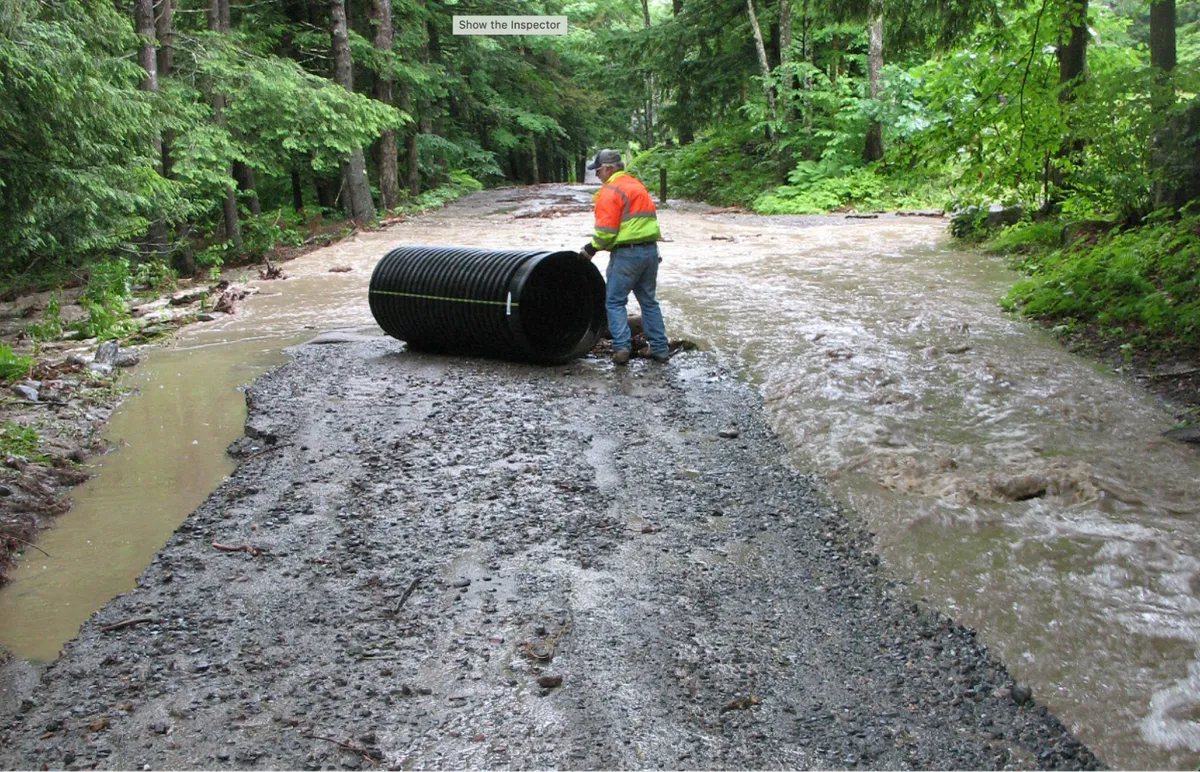
The repeat flooding in Vermont and the increasing frequency of natural disasters have put towns on the alert to be more prepared. The chance of being hit by an emergency has risen from being small to a likely scenario. An example is the 100-year flood, so named because the likelihood of such an event used to be on average once in 100 years, or one percent annually. However, in some parts of the country these so-called 100-year floods have happened more like once every eight years. Research data from First Street, an organization that connects climate risk to financial risk, finds that "critical infrastructure is failing nationwide because it was built without considering the impact of climate change" and that "$1.2 trillion is being spent on infrastructure that does not account for climate change" because engineers are still using National Oceanic and Atmospheric Administration (NOAA) rainfall estimates from 1973-2018 in their designs. The NOAA data update won't be completed until 2027.
Going from the national to local levels, how do Vermont towns like Thetford know when an emergency is imminent, and are we at all prepared?
Emergency alerts are sent through several different channels. Wireless Emergency Alerts (WEA) are short communications to a locally targeted area that can reach any mobile device that is WEA-enabled without the need for an app or a subscription. Wireless providers sell devices that are WEA-capable.
At a larger scale, there is the national Emergency Alert system (EAS) that permits the president to warn the nation within 10 minutes of the emergency. Federal, state, and local entities may also use the system to warn specific areas about threats, e.g. National Weather Service storm warnings issued to specific counties.
These systems are tied into the Integrated Public Alert and Warning System (IPAWS) that is FEMA's network for sending alerts to federal, state, territorial, tribal, and local agencies so that they, in turn, can issue WEA and EAS warnings to wireless devices, radio broadcasts, and also to NOAA weather radios used by ships etc. Local authorities can then issue their own alerts, though they must have IPAWS-compatible software to use this service.
Vermont also has its own system, VT Alert, through which the state and local responders can notify the public of emergency situations. Users receive alerts via the Everbridge mobile app and can continue to get them via SMS/TEXT, E-Mail, Mobile Phone, Work or Home Phone, and TTY/TDD Devices.
With that information, how prepared are towns to respond?
Towns are encouraged by their Regional Planning Commissions to have a Local Emergency Management Plan (LEMP) that establishes a chain of command and responsibility during an emergency. It requires that there be an Emergency Operations Center (EOC) which, in Thetford's case, is the Thetford Fire Station atop Thetford Hill. This would be the command center that coordinates the response to the emergency. Thetford's Emergency Management Director (EMD), Mariah Whitcomb, would supervise and direct all responses. The EMD and Town Manager Brian Story would track all requests for help or information and keep the public informed. The Town Clerk, Tracy Borst, would coordinate logistics, staffing, and finance (e.g. emergency purchasing, etc.). Additional key staff include the Fire Chief, the Police Chief and Selectboard Chair and Vice Chair.
Thetford has a primary local shelter at Thetford Elementary school. The school has its own generator, food preparation facility, and showers and can accommodate 50 people overnight, as well as pets. The former North Thetford Church building is an alternative; it also has a generator and food facility and can accommodate 25 persons, but not pets. Both facilities are equipped to provide cooling during heat waves as well as winter warm space.
The LEMP also lists the locations of vulnerable populations, for instance schools, daycares, etc. and the town’s high-hazard sites such as floodplains, bridges, large propane tanks, etc. The addresses of the most vulnerable and infirm residents are known to the EMD, Fire Chief, and Police Chief, but are not publicly listed.
But the scenario that some residents are most concerned about is their homes being cut off from communications and transport for days. In a disaster, roads can be impassable, and electricity and wireless networks may fail. These difficulties are compounded by the fact that Theford is a decentralized town of five to seven villages, depending on how they're counted, with many homes located on remote back roads.
Illustrating how communications can fail, a resident wrote after the December storm of 2022, "With the power outage here on Tucker Hill Rd for two days, and phone/internet out for three days, there was no way to get all the email messages about outages, town hall being open, etc or find out anything except by driving around. We were OK with a wood stove, but at least one set of elderly neighbors had no heat backup (but fortunately had family to go to in Lyme).... If temps were nearer zero, it would be much more serious. I don’t know the solution, but we here along this side of Tucker Hill may come up with a simple system to physically check in with each other."
Indeed, a system of "neighborhood captains," people who would check in on neighbors, had been initiated some time beforehand. Another resident wrote "Mariah Whitcomb at Thetford Emergency Management reached out to neighborhoods earlier today. She suggested that, after last week's storm and power outage and another potentially damaging storm forecast for Friday, it would be a good idea for neighbors to check in with each other. ... This is probably a good time to update our list of contact information and any notes Poor Farm Roaders want to include about resources to share or special needs. We haven't done that since early in the pandemic."
But the neighborhood captain idea was never widely adopted, as explained by yet another resident. "The neighborhood captains idea was proposed by Emergency/Fire/Fast Chief Don Fifield well before the Thetford Elder Network (TEN) started (2008). Mariah Whitcomb took this idea and made it happen, rudimentarily at first, when there were ice storms and a warming station was needed. At TEN’s request, she came into a TEN luncheon and spoke dynamically of the need (for all adults, ages 18 & up) to make first responders aware of one’s medical needs and more. Very important, but the idea achieved only partial traction because everywhere there were warnings about handling of personal info, and her questionnaire was on paper."
Hopefully the trend of increasingly severe weather will prompt residents to reconsider the neighborhood captain model. After all, there was once a tradition of neighbors helping neighbors, rooted historically in the close-knit farming community. Perhaps the new community can rekindle a common sense of purpose when it comes to watching out for each other in this new era of climate change. The marvel of high tech communications can only get us so far.
Comments 2
Sign in to join the conversation. It’s free, no password needed.
Sign inLi. Thanks for being a voice of reason. One issue with emergencies concern the fact that our power is above ground. I have asked power crews, state/local workers and our so-called representatives about putting lines under ground. The response has been anywhere from it is too hard, a few poles can be repaired or in the case of legislators the answer is a non answer. I was born in NYC and mostly Irish laborers built the Brooklyn Bridge and Italian immigrants, like my grandfather, built the first NYC subway system in a little over four years. Manhattan is bedrock and while blasting was used the mail tool were picks and shovels. Why do we fear immigrants? Could they not help with our infrastructure? As new people move into communities they seem less inclined to interact with the older residents. When I first bought a home here my neighborhood was connected and we were all captains. Money changes everything.
The need for community is real and urgent in this time when natural disasters are becoming increasingly frequent and more widespread. We are experiencing new weather patterns that require greater coordination among local authorities and first responders. Residents are increasingly concerned about flooding, drought, heatwaves, and ice, snow and freezing temperatures. The traditional Yankee position of standing on your own two feet, going it alone and being proud of your independence ~ which means you don’t ask for help ~ is vastly overrated and out of touch with reality. The fact that New England towns once had an official who carried the title of Overseer of the Poor raises questions about the importance of being the staunch independent resident who is not beholden to his neighbors and neither gives nor receives help (charity). Perhaps the average citizen has no need for charity and no desire to live in a place where there are people who have such needs, but times are changing and we may all need to shelter in a warm, dry place one day. When the day arrives, would it not be better to be bedding down on the TES gym floor next to someone you have thanked for shoveling you out during the winter storm or some kindly elder who graciously accepted your offer of a warm meal when her power went out and she could not prepare food for herself? These are truly neighbors, people who have shared the troubles of rural life with their families and their neighbors. They have shown themselves to be capable of doing a kindness and showing compassion for others. They have also demonstrated their willingness to be vulnerable, to ask for and to accept help and support. They understand the importance and the meaning of community. We don’t have to wait for the next disaster to happen in order to build community. In fact, we shouldn’t wait. It’s easier to be generous or to receive help from someone with whom you have already formed a bond. Let’s take the time and expend the energy to build on what we already have. Together we can make our community stronger. We will all benefit. By sharing our time and resources. By making the effort to be better neighbors, by finding ways to respect each other’s differences, and by creating opportunities to share ideas and concerns in constructive dialogue, we are building the relationships and honing the skills that will enable us to respond to the challenges of climate change.